

When Your Brain Can't Find the Brakes
Maybe your mind races when you lie down at night. Maybe worry shows up for no clear reason, or your mood dips at the same point every month. You may have been told it is "just stress."
Sometimes it is. But part of the story can be written in your genes. Your brain has a natural calming chemical called GABA, and one gene, GAD1, is involved in how your body makes it. Some common differences in that gene have been studied for their possible relationship to GABA-related pathways and mood.
This article explains what GABA does, what a gene variant actually is, what the research says about the GAD1 variants we test, and what you can do with that information. No science degree required.
What Is GABA, and What Does the GAD1 Gene Do?

Think of your nervous system like a car. Glutamate is the gas pedal: it keeps you alert, focused, and ready to act. GABA is the brake: it helps you calm down, relax, and fall asleep. You need both, in balance.
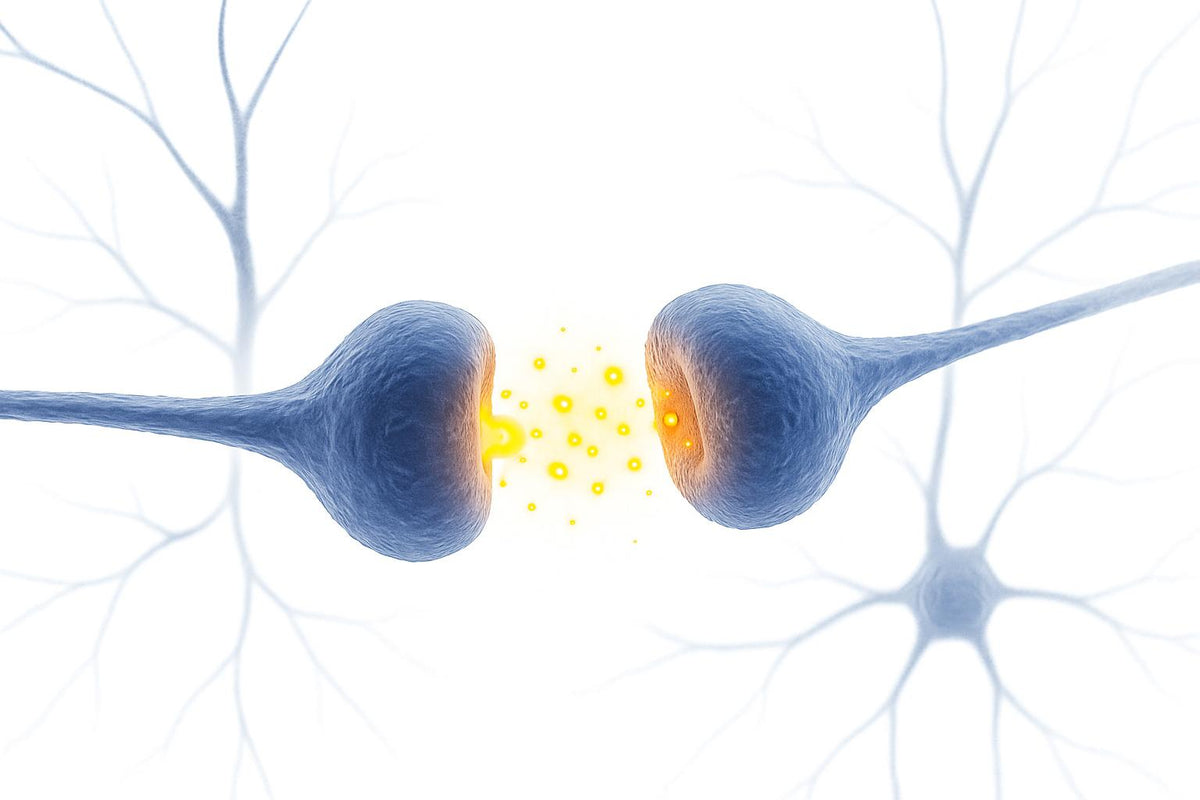
Here is the key detail. Your body makes GABA out of glutamate. It takes the gas and turns it into the brake. The tool that does this job is an enzyme called glutamic acid decarboxylase, or GAD for short.
The GAD1 gene holds the instructions for building that tool. Differences in GAD1 activity may influence this pathway, but a common gene variant does not tell us exactly how much GABA or glutamate an individual has. Think of it as one piece of the larger picture.
GAD also needs a helper to work: the active form of vitamin B6. Remember that, because vitamin B6 is one nutritional factor involved in this pathway.
What Is a Gene Variant? Nutrigenetics 101
Your DNA is a long instruction manual written in four letters. Almost everyone's manual reads the same. But at certain spots, one letter can differ from person to person. Those single-letter differences are called SNPs (pronounced "snips"), short for single-nucleotide polymorphisms.
Each SNP has a name that starts with "rs" and a number, like rs769407. You inherit one copy of each gene from each parent, so for every SNP you carry zero, one, or two copies of the less common letter.
Three things are important to know:
• A variant is not a mutation or a disease. These SNPs are common. Millions of healthy people carry them. They nudge how a gene works; they do not break it.
• A variant is a tendency, not a destiny. It can make a pathway a little slower or faster. Your food, sleep, stress, and hormones decide how much that matters.
• This is what nutrigenetics is about. Knowing your tendencies helps you choose the nutrition and habits that support the way your body is built.
The Two GAD1 Variants We Test: rs769407 and rs3828275
The GAD1 gene as a whole has real research behind it. A large study of more than 9,000 adults found that a common pattern of GAD1 variants was more frequent in people with anxiety, depression, and a worry-prone temperament (Hettema, 2006). A later study in Finland supported the same link (Donner, 2012).
Our panel reads two specific GAD1 variants. Here is an honest summary of what is known about each:
|
Variant |
What the research shows |
|
rs769407 |
Part of the GAD1 pattern in the 2006 study, with a small link to a worry-prone temperament. A follow-up study found a link to depression in women only (summarized here). |
|
rs3828275 |
Studied in people with panic disorder. On its own, it did not show a clear link (Weber, 2012). |
What does that mean for you? Any single variant has a small effect. Anxiety and mood are shaped by hundreds of genes plus your life and environment. We read your GAD1 results as one clue among many, alongside your other genes, your labs, your hormones, and how you feel. A result is a starting point for a conversation, not a label.
How GABA Connects to Your Energy
GABA does more than calm your brain. Your cells can also recycle it into fuel. Through a pathway called the GABA shunt, GABA is broken down and fed back into the energy factories inside your cells, the mitochondria.
That means the pathways involved in calm and cellular energy can overlap. Glutamate, GABA, and mitochondrial metabolism interact in complex ways, but a GAD1 variant alone does not tell us why someone feels wired or tired.
Simply stated: a calm brain and an energized brain share the same chemistry. These pathways are complex and influenced by many factors.
What Affects Your GABA Beyond Your Genes
You cannot change your genes. You can change how hard they have to work. These everyday factors make a real difference:
• Vitamin B6. GAD cannot make GABA without it. Good food sources include beef liver, salmon, tuna, chicken, and turkey. If you supplement, ask your practitioner about the right dose, because very high doses taken for a long time can cause nerve problems.
• Magnesium. Magnesium supports normal nervous-system function and participates in pathways involved in normal neurotransmitter signaling.
• Inflammation. Inflammatory signaling and glutamate metabolism can influence one another, although that relationship is complex.
• Hormones. Progesterone is metabolized into compounds that interact with GABA-related signaling. Hormonal changes before a period and during perimenopause can also coincide with changes in mood and sleep.
• Sleep and stress. Short sleep and constant stress can affect mood, cognition, and normal nervous-system function.
• Highly processed foods. Added flavor enhancers can increase the glutamate load for sensitive people.
How the GAD1 Test Works

Testing is simple. You swab the inside of your cheek at home and mail the kit back. No blood draw and no lab visit. Your genes do not change, so you only ever need to test once.
Your report shows which versions of rs769407 and rs3828275 you carry, along with the other genes on our panel. We then walk through how those results may fit into the bigger picture of your nutrition, supplements, and daily habits.
What the test can tell you: selected genetic tendencies that may provide additional context for your nutrition and wellness.
What it cannot tell you: whether you have anxiety, depression, or any other condition. A genetic test does not diagnose anything. That takes a conversation with a qualified practitioner.
Don't confuse it with the GAD65 antibody test. That is a blood test for an autoimmune condition, often ordered for type 1 diabetes or a rare nerve disorder. It has nothing to do with your genes.
Frequently Asked Questions About the GAD1 Gene
What does the GAD1 gene do? It holds the instructions for the enzyme that turns glutamate into GABA, your brain's main calming chemical.
Does a GAD1 variant mean I have anxiety? No. Common GAD1 variants have been linked to a slightly higher tendency toward anxiety and low mood, but they do not cause or diagnose anything on their own.
What are rs769407 and rs3828275? They are two common variants in the GAD1 gene. Our nutrigenetic panel reads both.
Is GAD1 linked to depression in women? One study found rs769407 linked to depression in women only. Larger studies are needed to confirm it.
How do I get tested? With a simple at-home cheek swab. You only need to test once.
Can I support my GABA naturally? Vitamin B6 and magnesium are involved in normal nervous-system function, while sleep, stress, nutrition, and hormonal changes can all influence overall well-being.
Find Out What Your Genes Say
Your genes load the system. Your daily choices decide what happens next. Our nutrigenetic panel reads your GAD1 variants along with selected genes involved in methylation, detoxification, and energy pathways, and uses that information as one part of a plan built for your body. Join our next Group Genetic Protocol Review to learn more about what your genes say.
This article is for education only. It is not medical advice and does not diagnose, treat, or prevent any condition.
© Courtney Hunt, MD, 2026
Sources
• Hettema JM et al. Association between glutamic acid decarboxylase genes and anxiety disorders, major depression, and neuroticism. Mol Psychiatry, 2006.
• Donner J et al. GAD1 and NPY variants and anxiety disorders in the Finnish Health 2000 sample. Am J Med Genet B, 2012.
• Weber H et al. Gender differences in associations of GAD1 variants with panic disorder. PLOS One, 2012.
Featured Product: GAD Stabilizer

Explore the product discussed in this article. Visit the product page for details, current pricing, and purchasing options.

Leave a comment
This site is protected by hCaptcha and the hCaptcha Privacy Policy and Terms of Service apply.